Delvina gives birth at Fort Marcy and is brought to the convent
The StaircaseDelvina’s birth at Fort Marcy turns a hidden emergency into a test of whether the convent will act as a place of asylum. Lizzy Enders and Mrs. Lacey find the exhausted mother and her newborn in a cold, ruined building; after Delvina explains that Lozen helped her through the night, Lizzy presses for shelter. The response draws in Bishop Jean Baptiste Lamy, who orders a wagon to bring Delvina, the baby, and Mrs. Lacey to the convent, making the episode a rescue effort as well as a birth scene.
Discovery at Fort Marcy
The discovery begins with a sound both Lizzy and Mrs. Lacey hear at once: a baby crying. They stop, look at one another, and Mrs. Lacey hurries across the flat, dry ground toward the only remaining building. The building is old, crumbling, and two stories high. Inside, she leads Lizzy to a small first-floor room whose holes in the walls offer a magnificent view but also let in the cold. The setting makes the danger immediate: the newborn is not in a place prepared for birth or warmth, but in a room exposed to the descending chill.
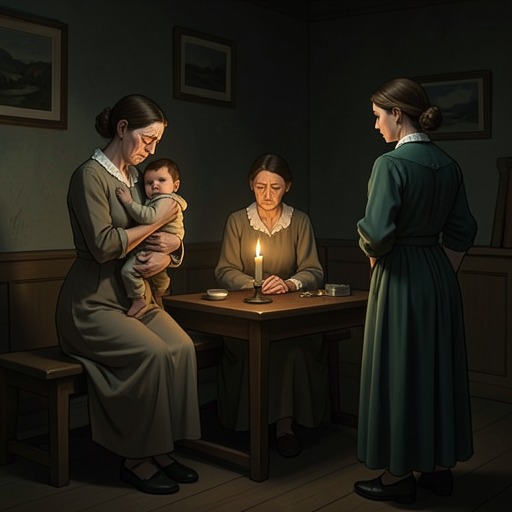
On the floor, a young woman lies huddled in dusty blankets while her baby wails. Delvina recognizes Mrs. Lacey and reaches for her, relieved that she has come. By the time Lizzy sees the child in Delvina’s arms, the crying has quieted to a mewing sound. The baby is tiny and resembles its mother. These shifts—from a cry that summons the visitors, to a quieted infant, to the exhausted mother’s appeal—give the encounter its fragile reprieve without making Delvina’s condition seem secure.
Delvina says the baby was born the previous night. She was physically alone in the building, but not without help: Lozen stayed with her, fetched water, and made a fire. Delvina points out the charred remains nearby as evidence of that care. The small remnant matters in the cold room: it records practical help already given, while also showing how limited the shelter was. Mrs. Lacey regrets that she did not see Lozen, but the conversation establishes that Delvina had survived the birth with assistance before Lizzy arrived.
The plea for shelter
When Delvina notices Lizzy, she recognizes her as the girl who visits Robert’s grave with Mrs. Lacey. Lizzy introduces herself, then asks after Delvina’s wellbeing and explains that Sister Roberta had wanted to know when her lying-in was expected. Delvina’s answer—that it came sooner than expected—makes clear that the birth has overtaken the plans for her care. Lizzy has brought blankets, spreads them over Delvina, and urges her and the baby to move somewhere warm and proper. She says Sister Roberta wants them at the convent and that a place is available.
Delvina does not simply refuse help; she fears what accepting it could expose others to. She warns that if her husband discovers her at the convent, no one can know what evil he might attempt. Her concern extends beyond her own safety to the people sheltering her. Lizzy answers that the convent is safer than the abandoned building and invokes the Bishop’s return, describing him as strong and decisive. She insists that Delvina must come that day, then turns to Mrs. Lacey for support.
Mrs. Lacey confirms the plan and assigns Lizzy the next step: ride back at once and have a wagon brought for Delvina and the child. Lizzy agrees. The urgency is practical, not merely emotional; the mother and newborn need to be moved from the cold room, and transport must be arranged. Yet Delvina says she is not as strong as she had thought and does not feel well. Her immediate hope is that the nuns will find a place for her baby, a statement that reveals how uncertain she remains about her own prospects even as Lizzy and Mrs. Lacey work to secure refuge.
The convent responds
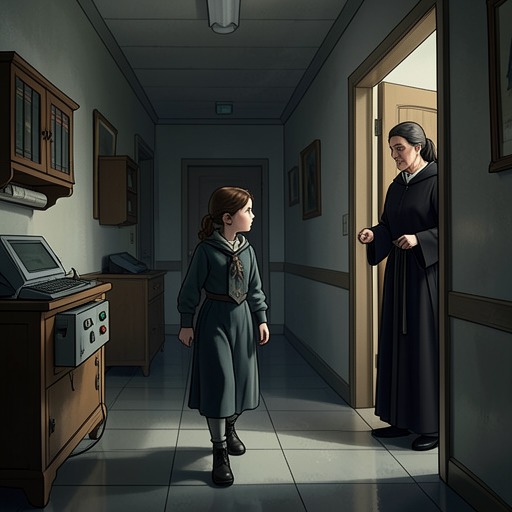
The journey back leaves Lizzy unsteady. When asked what happened, she blurts out her story while holding on to Ben, then collapses. Gregorio carries her inside despite her protests and calls for his wife to bring her to the nuns and for Bishop Jean Baptiste Lamy to be fetched from supper. The response rapidly transforms the household: Ramona seats Lizzy at the table, servants are sent for Mother Magdalena and the Bishop, and Lizzy tells her account again.
Bishop Jean Baptiste Lamy acts without delay. He orders Gregorio to take out the wagon and fetch Mrs. Lacey, the baby, and Delvina, and directs Sister Roberta to go with him. Sister Roberta runs to get remedies. Lizzy asks to accompany them because the people searching for Delvina will not know where to find her. The Bishop replies that they know where the fort is and where the deserted building stands. He also says Delvina should have been brought to them sooner, shifting the scene from the immediate rescue plan to the question of why she was left there.
Mother Magdalena answers that she knew who Delvina’s husband was and could not endanger the girls. The disagreement exposes the tension between protecting the convent community and extending protection to a woman fleeing danger. The Bishop calls the institution his church, school, and convent, and defines it as a safe house and a place of asylum. He then stops short of continuing the dispute with Mother Magdalena, postponing their difference rather than allowing it to delay the urgent arrangements. The wagon and Sister Roberta’s remedies make that claim of refuge concrete: care requires both a declared sanctuary and people sent to reach the person who needs it.
Aftermath and significance
Although Lizzy wants to go with the rescue party, the Bishop recognizes her exhaustion and sends her to be cared for. When he asks what happened at the building, Lizzy reports that Delvina said Lozen had been there. The Bishop shows no surprise and does not ask who Lozen is, although the other people in the kitchen do. His response suggests that he already knows about Lozen; Lizzy understands that she need not explain further. The moment links the remote birth scene to the Bishop’s knowledge while keeping the source and extent of that knowledge unstated.
The Bishop tells Ramona to feed Lizzy, give her a hot bath, and put her to bed in the guest room, with instructions to call him if Lizzy is not all right. After eating vermicelli soup, Lizzy is taken upstairs; servants prepare a fire in the hearth and fill a copper tub with hot water. Ramona washes Lizzy’s hair and brushes it until she is drowsy, then leaves her in the feather bed with a lighted candle. This care parallels the rescue effort: while Sister Roberta and Gregorio go to bring the vulnerable mother and child in from Fort Marcy, the convent’s household tends to the girl who found them.
The episode therefore places vulnerability and responsibility side by side. Delvina has given birth in a cold, deteriorating room, and her fear of her husband makes refuge complicated; Lizzy responds by seeking help, Mrs. Lacey supports the move, and the Bishop commits the institution to receiving them. The scene does not erase the dangers that remain, but it changes the situation from isolated survival to an organized attempt at protection. Its defining turn is the convent’s decision to act as an asylum, with the needs of Delvina and her newborn made immediate by the sound that first drew Lizzy and Mrs. Lacey toward the ruined building.